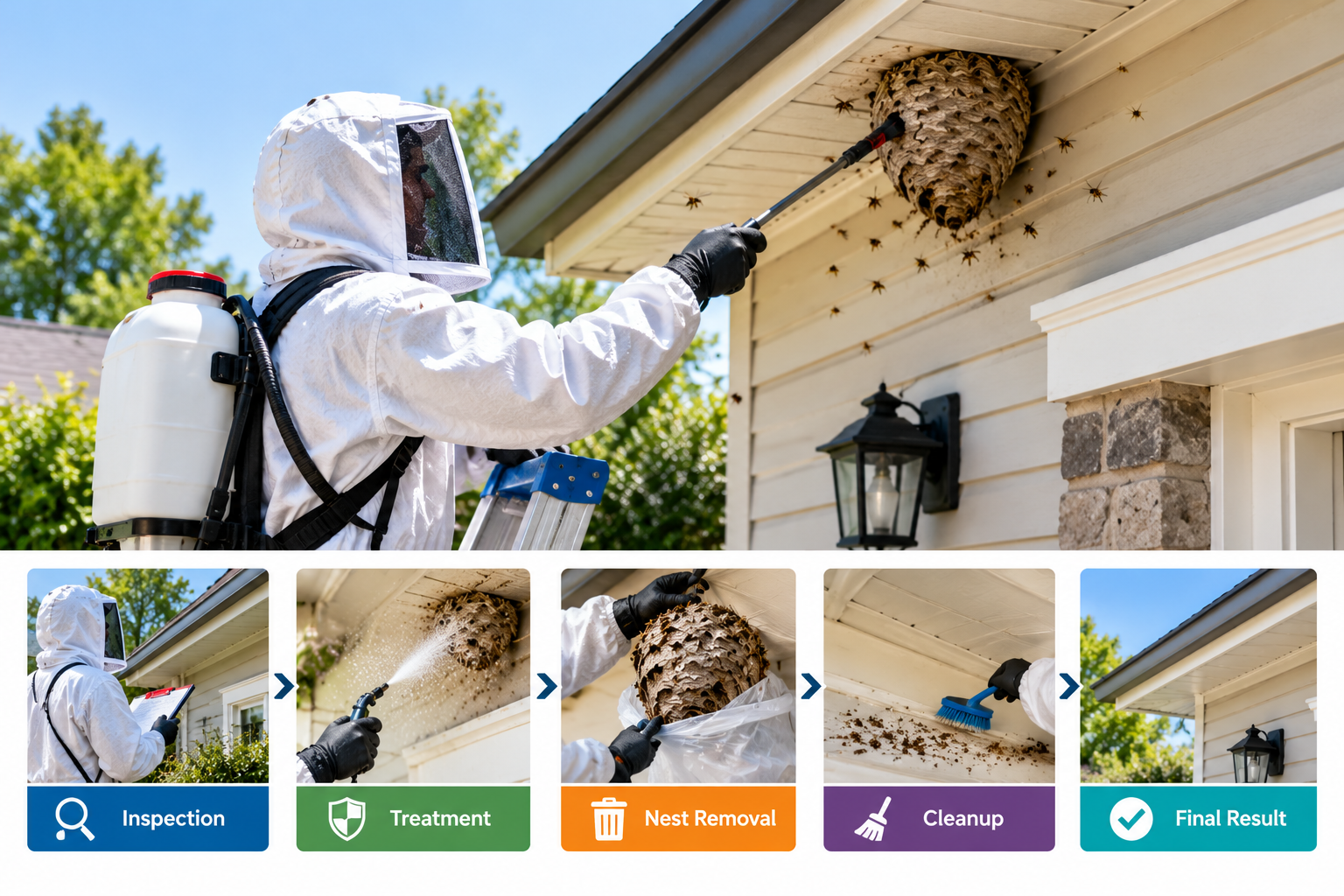
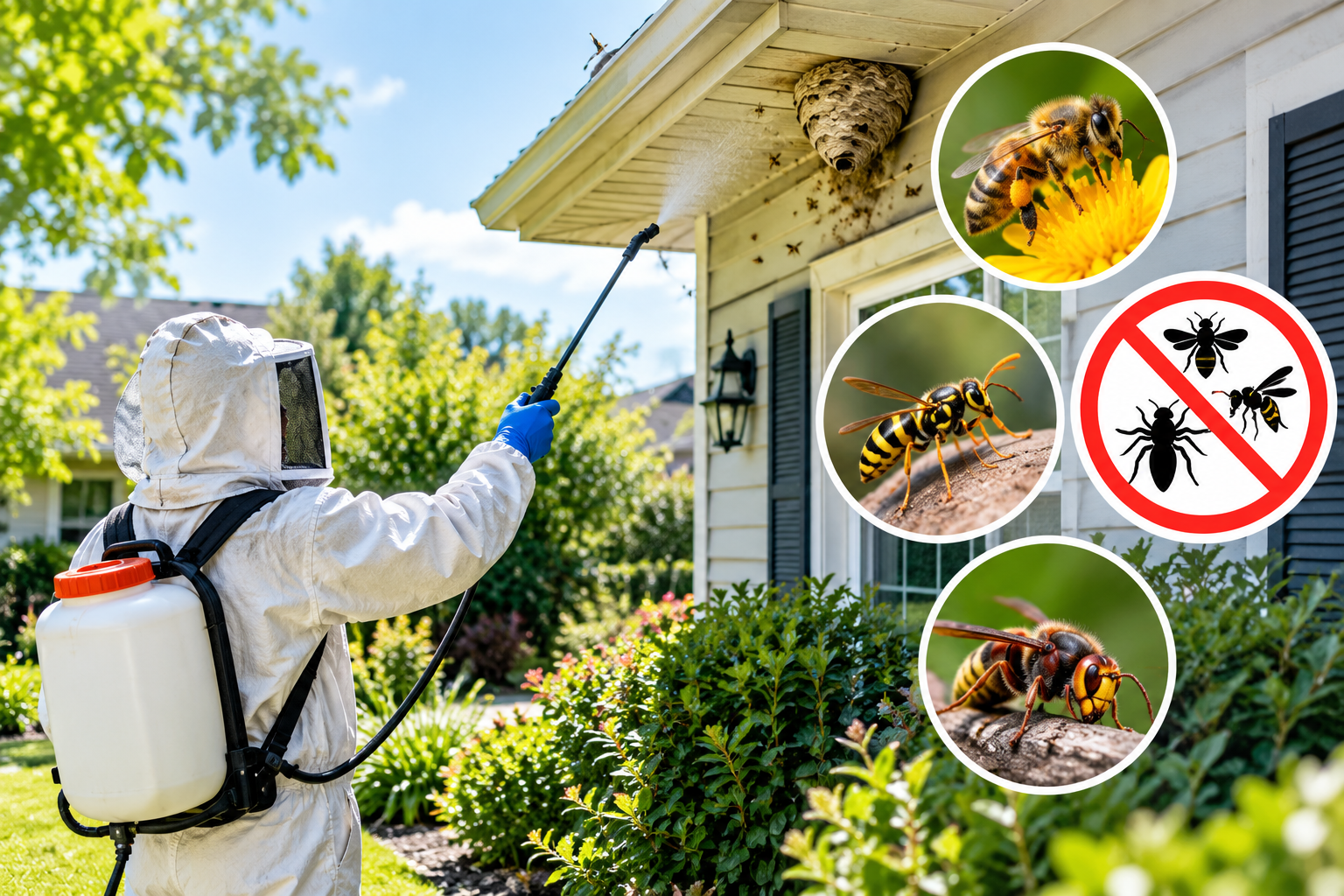
Finding a bee hive on your property can be surprising, particularly when it appears near your home, garage, garden, or another area you use regularly. Your first instinct may be to remove it immediately, but disturbing an active colony without knowing where it is established can create additional problems.
The better starting point is to keep your distance and observe the activity. Finding out whether the bees are simply gathering temporarily or have established a permanent colony can make a significant difference in deciding what should happen next. Professional Bee Removal Services can help assess the situation and determine an appropriate approach for safely addressing an established colony.
Keep Your Distance From the Hive
An active hive should not be poked, sprayed, knocked down, or otherwise disturbed. Even if the hive looks small from the outside, there may be considerably more activity inside or nearby.
Keep children and pets away from the area and avoid standing directly in the flight path of the bees.
You do not need to approach the hive to gather useful information. Its location, the direction the bees are traveling, and how long the activity has continued can all be observed from a safe distance.
Find Out Where the Bees Are Going
Watch where the bees enter and leave. You may notice them moving into a tree cavity, wall opening, roofline, shed, or another enclosed area.
This matters because a visible cluster does not always show the full extent of the colony. Bees may have established themselves inside a structure while only a small portion of the activity is visible from outside.
If you notice a consistent entrance point, make a note of it rather than attempting to block it.
A Hive and a Swarm Are Not the Same
A large group of bees gathered together can look like a hive, but it may actually be a temporary swarm.
Swarming occurs when bees leave an existing colony and gather temporarily while searching for a new place to establish themselves. The group may eventually move on, although there is no way to know from appearance alone how long it will remain.
If the cluster stays in one place or bees begin entering a structure, the situation deserves closer attention.
When Bee Hive Removal Becomes Necessary
A hive located far from normal activity may not create the same concern as one beside a front door or inside a wall.
When a colony has established itself somewhere that interferes with normal use of the property, Bee Hive Removal Service may be appropriate.
The removal approach depends on the location of the colony. A hive hanging openly from a tree presents different access considerations from one hidden behind siding or inside a wall cavity.
Pay Attention to Honey Bees
Honey bees are important pollinators, so identification matters before deciding how a colony should be handled.
If you are considering Honey Bee Removal Service, provide information about the hive’s location and whether the bees are entering a structure. This can help establish what kind of situation needs to be addressed.
Avoid assuming that every bee-looking insect is a honey bee. Different species can have different nesting habits and behaviors.
Why Bees Inside Walls Are Different
A colony inside a wall creates a different challenge from one that is completely exposed. Simply sealing the visible entrance can leave the colony trapped inside the structure.
There may also be honey, wax, and other hive material left behind. Depending on the location, dealing with the situation may require access to the affected area rather than simply removing visible bees.
That is why identifying the entry point before taking action is important.
What If You Are Searching for Local Help?
Homeowners often begin with a search such as Honey Bee Removal near me after noticing a hive or repeated bee activity.
When contacting a removal provider, explain where the bees are located, how long you have noticed them, whether they are entering a structure, and whether anyone has been stung.
You can gather this information without approaching the hive. A simple description from a safe distance is usually more useful than taking unnecessary risks.
What If It Turns Out to Be Wasps?
A nest around your home is not necessarily a bee hive. Wasps can build nests around rooflines, sheds, eaves, wall spaces, and other sheltered areas.
If the insects turn out to be wasps, Wasp Removal near me may be the more relevant search when looking for assistance.
Do not assume that a wasp nest should be handled exactly like a bee colony. Identifying the insect first makes the situation easier to approach appropriately.
And What About Hornets?
Hornets can also establish nests around residential properties, including trees and elevated or sheltered areas.
A nest near an entrance, walkway, patio, or another frequently used area deserves particular attention because people are more likely to come into close contact with the insects.
If the activity is identified as hornets, Hornet Removal Services may be relevant depending on the location and circumstances.
Preparing for an Inspection
You can make an inspection easier by noting a few details:
- Where the insects are entering and leaving
- How long they have been active
- Whether the hive is visible
- Whether bees are entering a wall or other structure
- How close the hive is to doors or walkways
- Whether children or pets regularly use the area
- Whether anyone has already been stung
Do not approach the hive to collect this information. Observations from a safe distance are enough.
How to Reduce Future Nesting Problems
After the hive or nest has been addressed, inspect the surrounding property for possible entry points. Gaps around structures, damaged screens, roofline openings, and other accessible spaces can provide opportunities for insects to establish nests.
Outdoor food and waste should also be managed carefully. Keep trash containers closed and avoid leaving sugary food or drinks exposed for extended periods.
These steps will not eliminate normal insect activity, but they can reduce some of the conditions that make residential areas attractive nesting locations.
Frequently Asked Questions
What should I do when I find a bee hive?
Keep your distance, keep children and pets away, and avoid disturbing the hive. Observe its location and activity from a safe distance.
Should I block the entrance to a bee hive?
No. Blocking an active entrance without understanding where the colony is located can cause the bees to search for another route.
Can honey bees live inside walls?
Yes. Honey bees can establish colonies inside wall cavities and other enclosed spaces when they find a suitable entry point.
Is a swarm the same as an established hive?
No. A swarm may be temporary, while an established hive represents a more permanent colony.
How can I tell if a nest contains bees or wasps?
Appearance, behavior, and nest characteristics can provide clues, but you should not get close to an active nest simply to identify it.
Can wasps build nests around homes?
Yes. Depending on the species, wasps can establish nests around rooflines, eaves, sheds, walls, and other sheltered areas.
What information should I provide when requesting removal?
Explain where the insects are located, how long they have been present, whether they are entering a structure, and how close the activity is to people or pets.
Final Thoughts
Finding a hive does not mean you need to immediately disturb it. Keeping people away from the area, observing the activity from a safe distance, and identifying where the colony is established are better first steps. C&C Bee can help assess the situation and determine the appropriate next steps.
Once the type of insect and location are understood, it becomes much easier to determine what should happen next. A careful approach protects the people using the property while giving the removal process a clearer starting point.