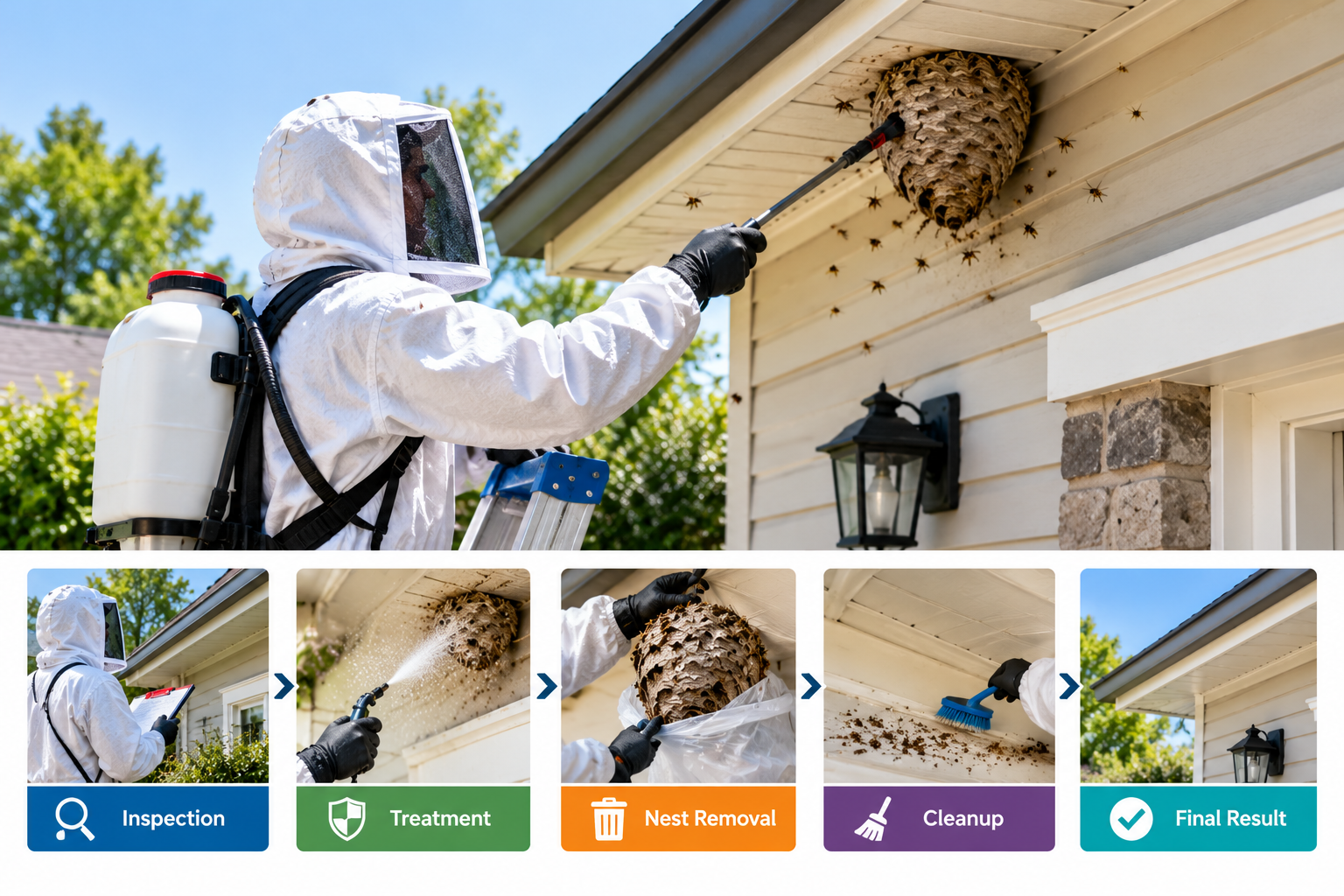
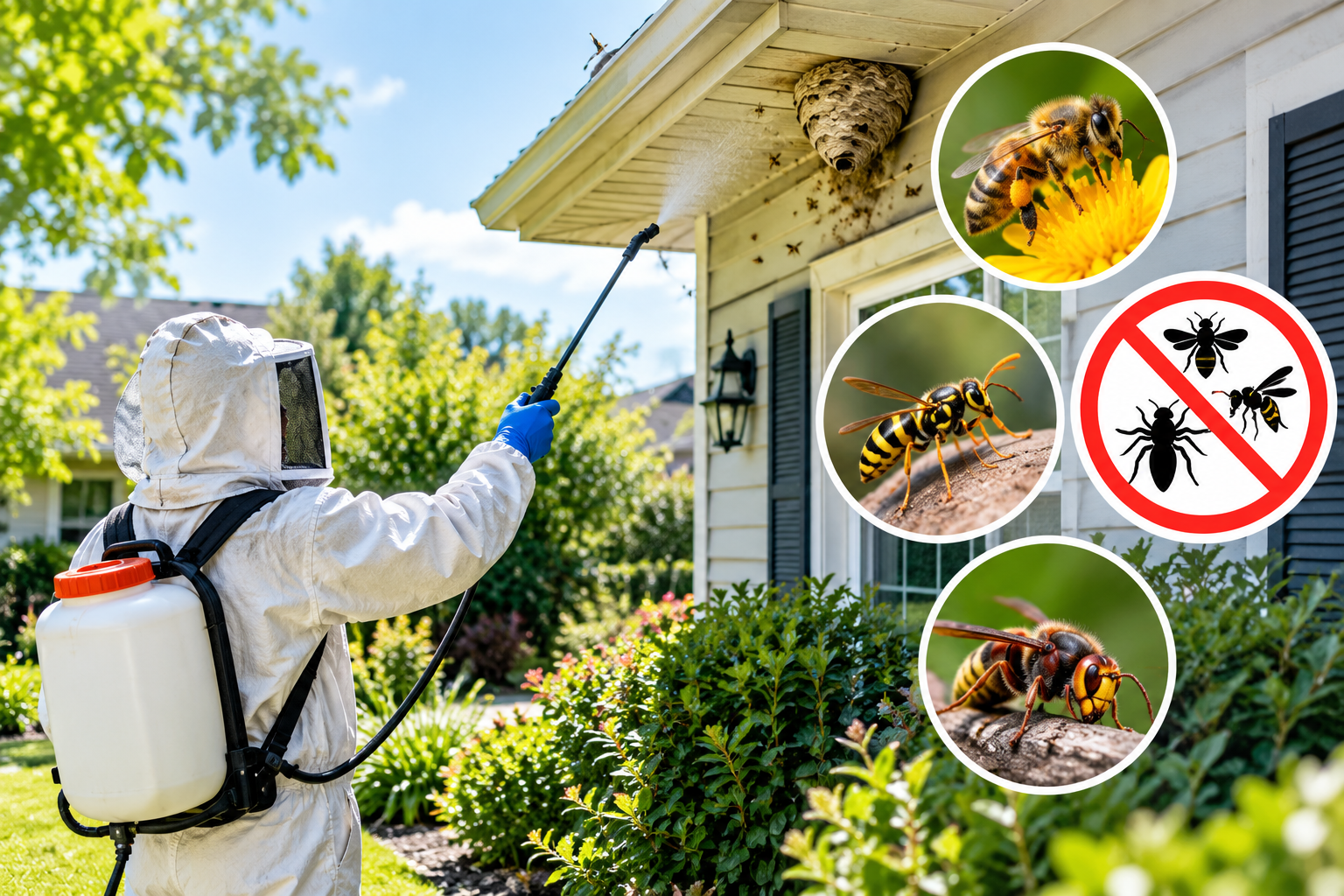
Finding flying insects around your home can be confusing, especially when you cannot immediately tell whether you are looking at bees, wasps, or hornets. Each has different nesting habits and behavior, so identifying what you are dealing with is an important first step before deciding what to do next. Bee Removal Services can provide a practical approach when bee activity becomes a concern around your property.
A few bees visiting flowers are very different from a large group repeatedly entering a wall or gathering around a nest. The location, frequency of activity, and appearance of the insects can all provide useful clues without requiring you to get close to them.

Start With Where You See the Insects
The location of insect activity can tell you quite a bit. Bees are often noticed around flowers, trees, gardens, and other areas where they can find nectar or pollen. Wasps may appear around food, trash, roof edges, sheds, and sheltered parts of a property.
Hornets can also build nests in trees or elevated areas around homes. If you notice insects repeatedly flying into or out of one particular opening, there may be a nest or colony nearby.
You do not need to approach the area to investigate. Watching the activity from a safe distance is usually enough to notice whether the insects are simply passing through or repeatedly returning to the same location.
When Bees Become a Property Concern
Bees play an important role in pollination, so seeing them around a garden does not automatically mean they need to be removed. The situation changes when a colony establishes itself somewhere that creates a problem for the property or the people using it.
For example, bees entering a wall, attic, shed, or another enclosed area may indicate that a colony has established itself inside the structure. In situations like this, Bee Removal Services may be worth considering rather than attempting to disturb the colony yourself.
The location of the colony matters because simply dealing with visible bees may not address what is happening inside the structure.
How Wasps Behave Differently
Wasps can establish nests in a variety of locations around residential properties. Eaves, roof areas, sheds, wall spaces, and other sheltered locations can provide suitable places for a nest.
If you are searching for Wasp Removal near me, it is useful to know where the wasps are most active before contacting a removal company. Repeated activity around one location can provide a clue about the nest’s position.
Do not poke, knock down, or spray an active nest just to confirm what is inside. Disturbing it can cause the insects to become more active and may increase the risk of stings.
What Makes Hornets Different?
Hornets can also become noticeable when they establish a nest close to a home or another frequently used area. Their activity may be particularly concerning when a nest is near an entrance, walkway, patio, or outdoor living space.
In those situations, Hornet Removal Services may be appropriate after the nest has been identified and its location assessed.
As with other stinging insects, the goal should be to understand the situation without unnecessarily disturbing the nest.
Not Every Bee Situation Requires Removal
Sometimes homeowners see a temporary swarm and assume they have discovered a permanent hive. That is not always the case.
A swarm may gather temporarily while scout bees search for a suitable location. Other situations involve an established colony that has already occupied a cavity or structure.
Knowing the difference can prevent unnecessary action. If a group of bees has gathered in one location, observe it from a safe distance and pay attention to whether the activity remains concentrated there.
When Local Removal May Be Necessary
A nest becomes more concerning when it is located close to people, pets, entrances, children’s play areas, or frequently used outdoor spaces.
Someone looking for Local Bee Removal services should be prepared to explain where the insects are located, how long they have been present, and whether they appear to be entering a structure.
That information can make an inspection more useful and help determine what type of situation you are dealing with.
Look for Signs of a Nest
Repeated insect activity is one of the clearest clues that a nest may be nearby. You may notice insects entering and leaving the same crack, opening, tree cavity, roofline, or wall section.
Other signs can include visible nest material, increased activity around one area, or insects consistently following the same flight path.
You do not need to inspect the nest closely. If the activity is obvious from a distance, that information is usually enough to describe the situation.
What to Do Before Help Arrives
Keep children and pets away from the area and avoid blocking the insects’ entrance or exit. Do not throw objects at the nest or attempt to remove it with household chemicals.
If possible, close nearby windows and doors without approaching the nest. You can also make a note of where you first noticed the activity and whether the number of insects seems to change during different parts of the day.
Simple observations can be more useful than taking unnecessary risks to get a closer look.
Frequently Asked Questions
How can I tell if I have bees or wasps?
Appearance, behavior, nesting location, and activity patterns can provide clues. If you are uncertain, avoid disturbing the insects while the situation is being assessed.
Are bees always a problem around a home?
No. Bees naturally visit flowers and plants. A property concern usually develops when a colony establishes itself in or near an area regularly used by people.
Should I remove a wasp nest myself?
It is safer to avoid disturbing an active nest, particularly when you do not know its size or the species involved.
Where can hornets build nests?
Depending on the species, hornets may build nests in trees, elevated locations, or sheltered parts of structures.
What should I do if bees enter my wall?
Avoid sealing the opening or disturbing the colony until the situation has been properly assessed. The visible entrance may lead to a larger colony inside the structure.
Does every swarm mean there is a hive?
No. A swarm can be temporary, although continued activity in one location may indicate that the bees have established a colony.
How can I reduce future insect problems?
After the situation has been addressed, inspect possible entry points around the property and keep food waste and exposed food properly contained.
Final Thoughts
The first step is not removing the insects. It is understanding what you are actually seeing. Bees, wasps, and hornets have different habits, and the location of their activity can provide important clues about the situation. C&C Bee can help assess the activity and determine the appropriate next step.
If a nest is close to people, pets, entrances, or inside a structure, avoid disturbing it and focus on getting the situation properly assessed. A careful approach can make the next step much clearer.